
Membedah Soal Case Study PMP ECO 2026
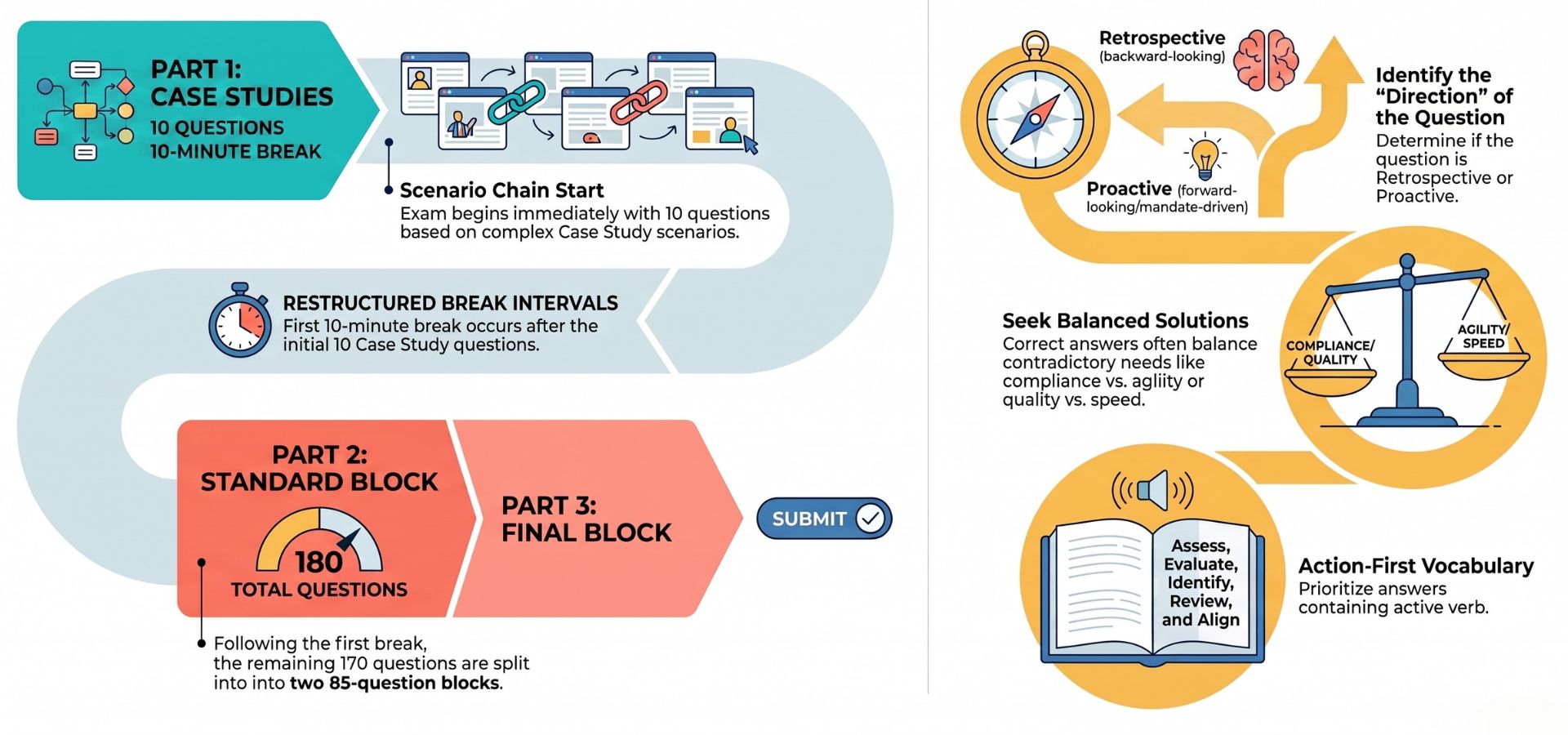
Perubahan paling mencolok di PMP ECO 2026 ada di awal ujian. Begitu mulai, kamu langsung dihadapkan dengan Case Study yang terdiri dari 4 sampai 5 pertanyaan beruntun yang semuanya merujuk ke Case Study yang sama. Soal tipe “scenario chains” ini sudah pasti ceritanya lebih panjang dari soal-soal situational PMP yang sering kita temui.
Dengan adanya Case Study ini, struktur ujian PMP juga ikut berubah. Yang sebelumnya jeda 10 menit pertama muncul setelah menyelesaikan 60 soal, di ujian PMP terbaru ini jeda 10 menit pertama muncul setelah Case Study. Kemudian jeda 10 menit kedua akan muncul kembali setelah menyelesaikan sekitar 85 soal. Sehingga struktur ujiannya menjadi: 10 Soal Case Study -> istirahat 10 menit -> 85 soal -> istirahat 10 menit -> 85 soal -> submit.
Setelah melihat beberapa contoh soal-soal Case Study dari beberapa PMP Exam Simulator, saya menemukan sesuatu yang menarik kalau soal Case Study ini punya kecenderungan pola yang bisa kita pelajari. Meskipun setiap soal tidak selalu memiliki pola yang sama persis, tapi kita bisa memahami bagian besar apa yang sedang diceritakan di soal.
Tipe Soal Case Study
Soalnya sendiri banyak bercerita mengenai situasi project management di berbagai industri, seperti project pembuatan jalan tol, perusahaan manufaktur, pembuatan software, sampai digital transformation. Ada beberapa elemen yang pasti selalu muncul, ada juga beberapa elemen yang kadang muncul di soal.
Berikut adalah beberapa elemen yang muncul di soal
- Project Context: Di soal akan dijelaskan mengenai organisasinya apa, projectnya tentang apa, dan seberapa besar projectnya. Dan ini hampir ada di semua soal Case Study. Bisa dibilang ini sebagai batu pijakan, kita sedang berada di lingkungan yang seperti apa.
- Stakeholders: Ini yang selalu ada di soal, siapa stakeholdernya diceritakan dengan sangat jelas, mulai dari Sponsor, Functional Manager, sampai Government. Karena tanpa lebih dari satu pihak yang berkepentingan, tidak akan ada keputusan yang layak ditanyakan ke project manager.
- Problem: Masalah yang muncul seringkali digambarkan sebagai suatu gesekan atau friction point. Nahhh, disinilah intinya. Elemen inilah yang pasti selalu muncul di setiap soal Case Study. Karena tanpa masalah, maka tidak ada soal PMP yang bisa dibuat.
Berikut adalah beberapa elemen yang bisa muncul di soal.
- Project Manager Activity: Di beberapa Case Study yang saya perhatikan, ada beberapa kasus dimana Project Managernya sudah melakukan beberapa aktivitas untuk mengatasi masalah yang muncul, seperti membuat stakeholder engagement matrix, merancang RACI matrix, ataupun stakeholder mapping power interest. Aktivitas ini bisa terlihat secara eksplisit di soal. Contoh: “the project manager conducted a stakeholder analysis”.
- Conclusion: Ada beberapa soal yang memberikan penutup cerita dalam bentuk konsekuensi yang sudah terjadi, seperti KPI turun, budget overrun, ataupun schedule delay. Biasanya di akhir penutup ini, ada mandat yang harus project manager kerjakan berikutnya. Contoh: “the project manager has been asked to”.
Pertanyaan Case Study
Untuk Case Study yang memiliki konklusi, biasanya pertanyaannya lebih ke pertanyaan retrospective seperti “What actions should the project manager have taken”, atau “What should the project manager have done?”.
Sedangkan untuk Case study yang project managernya menerima mandat apa yang harus dilakukan berikutnya cenderung memunculkan lebih banyak pertanyaan “What should the project manager do next?” atau “What can project manager do?”. Intinya kita masih ditanya mengenai langkah pencegahan proaktif, dan mindset apa yang harusnya dimiliki oleh project manager ketika menemui masalah. Yes, tipikal pertanyaan PMP, bukan?
Dari sini kita sudah bisa menganalisis, kira-kira jawaban yang benar selalu muncul kata-kata seperti:
- Mengandung kata kerja seperti assess, evaluate, identify, review, reassess, consolidate, integrate, tailor, align, present options, refine.
- Melibatkan stakeholder secara aktif dan transparan, seperti present options to stakeholders, inform stakeholders, establish shared interpretation.
- Menyeimbangkan dua sisi yang kadang kontradiksi atau bertentangan, seperti compliance vs agility, control vs autonomy, speed vs quality.
Jawaban salah yang selalu muncul:
- Terlalu pasif, seperti kata email, log, document only, wait, defer, pause, postpone. Kelihatannya aman tapi sebenarnya tidak menyelesaikan apa-apa.
- Terlalu ekstrem, seperti kata eliminate all risk, escalate, centralize, reduce, remove.
- Project manager mengerjakan sesuatu di luar kewenangannya, seperti fast-track certification from government, adding the budget.
- Aktivitas yang tidak sesuai dengan fase project. Soal berada di fase executing, tapi jawabannya di fase planning.
- Melihat masalah hanya sebagian. Soal memiliki masalah di compliance dan risiko, tapi jawaban hanya menyelesaikan masalah compliance saja.
Contoh Soal Case Study
Sekarang mari kita lihat 3 contoh Case Study. Saya ambil contoh dengan 3 situasi atau environment yang berbeda.
Case Study 1: Metro Light Rail Transit Expansion
A project manager is overseeing a multi-million-dollar project to expand a metropolitan area’s light rail transit network, including two new lines, six stations, and a maintenance depot. The project is expected to take three years and involves multiple stakeholder groups, including civil engineers, transit authority officials, urban planning board members, environmental regulators, construction contractors, local business owners, commuter advocacy groups, union representatives, and the IT department responsible for the ticketing system.
At the start of the project, the project manager conducted a stakeholder analysis to develop a RACI (responsible, accountable, consulted, informed) matrix and a power/interest grid. Using this information, the project manager created a stakeholder engagement strategy and documented stakeholder expectations and communication preferences.
As project execution got underway, several challenges emerged.Environmental regulators raised concerns after discovering a protected wetland habitat near one of the proposed rail corridor, while localbusiness owners along the construction route expressed frustration over declining foot traffic and revenue during construction.At the same time, the IT Department struggled to integrate the new digital ticketing system with the transit authority’s legacy fare collection system while maintaining passenger data security.
By the time the project reached closure, reports showed key performance indicators (KPIs) indicating low stakeholder satisfaction. The dissatisfaction resulted from a four-month permitting delay caused by the wetland habitat discovery, followed by costly corridor rerouting. Ultimately resulting in a significant budget overrun.
Pertanyaan:
- What action should the project manager have taken to address stakeholder concerns and mitigate impacts on the project’s timeline and budget? (Refer to the case study)
- A. Enhance risk management by scheduling regular team meetings and ensuring clear communication with stakeholders.
- B. Review the work breakdown structure (WBS) to determine the impact of the changes and update the document accordingly.
- C. Incorporate resilience into the project management approach to help anticipate, respond to, and recover from risks.
- D. Develop a collaborative problem-solving process to eliminate risk, ambiguity, and uncertainty from the project.
- What should the project manager have done when environmental regulators raised concerns about the protected wetland habitat near the proposed rail corridor? (Refer to the case study)
- What actions should the project manager have taken to address the IT department’s data security concerns during the ticketing system integration and maintain the project’s schedule? (Refer to the case study).
- What should the project manager have done to align stakeholder expectations with the project vision, given the frustration from local business owners over declining foot traffic during construction? (Refer to the case study)
Disini ada contoh project infrastruktur dengan tenggat waktu yang jelas. Di soal juga terlihat bahwa project manager sudah malakukan aktivitas dan ada penutup yang berubah konsekuensi yang sudah terjadi. Pertanyaan lebih banyak ke tipe retrospective.
Case Study 2: Fintech Payments Startup Acquisition
A global e-commerce company is acquiring a fast-growing fintech startup that specializes in embedded payment processing technology. The acquisition will enable the parent company to offer integrated checkout and payment services directly within its platform.Key stakeholders include the project sponsor, executives from both companies, IT and HR managers, and merchant customers.
The project manager has been tasked with developing an integration strategy, which includes assembling an integration team, aligning product roadmaps, and managing the integration of payroll and benefits systems. The project sponsor estimates that the project will take six months to complete.
The two companies have distinct corporate cultures and operating models, making integration a considerable challenge. In addition, the project manager must ensure a seamless transition for merchant customers. The project manager will collaborate with the IT manager to ensure that the various disparate payment processing infrastructures and subsystems are compatible and successfully merged with minimal downtime for merchants. Shared applications must be consolidated to reduce cost and enable the parent company to assume ownership. Team members from both companies must learn to operate the shared and consolidated applications.
Pertanyaan:
- What should the project manager do to create opportunities for knowledge transfer among the payment systems engineers (Refer to the case study)
- A. Encourage team members to ask questions of the engineers who have been with their companies the longest.
- B. Foster open communication among the teams and promote team-building activities and mentoring relationships.
- C. Conduct virtual surveys to encourage team members to share their expertise and experiences anonymously.
- D. Schedule formal face-to-face meetings with both teams to provide a dedicated space for information sharing.
- What can the project manager do to assess each organization’s culture and help team members embrace the inevitable changes resulting from the acquisition? (Refer to the case study)
- What should the project manager do to ensure that the expected project outcomes remain in alignment with the company’s values? (Refer to the case study)
- A foreign sovereign wealth fund has expressed interest in acquiring a minority stake in the newly combined company. What should the project manager do in response to this development? (Refer to the case study)
Di contoh yang kedua, tidak ada bukti proses yang sudah dijalankan oleh project manager. Justru di paragraf kedua ada mandat baru yang belum dikerjakan, dan tidak ada penutup cerita yang berupa konsekuensi. Cerita hanya berhenti di deskripsi tantangan yang sedang berlangsung. Bahkan ada pertanyaan yang menunjukkan fakta baru yang sama sekali tidak disebut di soal. Sepertinya PMI ingin memberikan variasi soal yang lebih terbuka untuk kasus-kasus yang lebih banyak berhubungan dengan “people”, sehingga pertanyaanya masih berlanjut ke cerita lain.
Case Study 3: Modernization of Hybrid-Based Health Insurance Claims
A large national health insurance provider is undertaking a multi-year program to modernize its claims processing systems. Operating across multiple states under strict regulatory oversight, the organization is under increased scrutiny from state insurance commissioners following recent claims-processing errors that affected policyholders.
The program brings together several interdependent initiatives and uses a hybrid delivery model. Core claims-adjudication infrastructure follows a predictive approach due to regulatory and actuarial constraints, while the new digital claims-submission portal for policyholders uses adaptive methods to enable faster feedback and incremental value delivery.The work involves a primary systems integrator and several specialized third-party vendors.
Senior leaders want to see early progress and tangible value,but they are concerned about regulatory exposure, reputational risk, and provider network disruption. Governance structures are unclear, which leads to inconsistent decision rights across regional claims offices. Ongoing changes to state-level claims-reporting regulations create uncertainty around scope and deadlines. Dependencies between the legacy mainframe adjudication engine and the new digital portal increase risk over time. Frequent change requests driven by regulators and provider networks put additional strain on delivery.Business sponsors continue to push for steady, visible results to sustain investment and support.
The project manager has been asked to support senior leadership by ensuring that governance decisions are consistent, regulatory compliance is proactively managed, and delivery remains focused on outcomes and value rather than activity. The project manager must balance regulatory obligations with the need for adaptability, manage risks without excessive escalation, and apply change control in a way that safeguards compliance while maintaining momentum.
Pertanyaan:
- Regional claims offices are inconsistent in how they escalate decisions, with some offices acting quickly on emerging issues and others delaying until problems become severe. Senior leadership requests recommendations for consistent escalation without excessive centralization. What should the project manager do? (Refer to the case study)
- A. Establish a unified governance model with defined decision authority, escalation points, and boundaries for regional customization.
- B. Require all regional offices to escalate cross-project decisions to senior leadership until governance maturity improves.
- C. Maintain regional governance frameworks, resolving inconsistencies through informal coordination when specific issues emerge.
- D. Focus on delivery execution and rely on existing regional governance practices to stabilize naturally over time.
- During the program, a new state regulation changes claims-reporting requirements. Regional compliance teams interpret the new requirements differently, causing uncertainty about scope and timelines. What should the project manager do? (Refer to the case study)
- Leadership sets a launch date for the digital claims-submission portal tied to a state regulatory deadline, sharply increasing schedule pressure. Accelerating delivery meets the date but risks integration and quality issues, while keeping the current plan protects readiness but risks missing the deadline. Senior leadership asks for a schedule recommendation. What should the project manager do? (Refer to the case study)
- Dependencies between the legacy mainframe and new digital claims portal are increasing several risks’ probability and impact. Regulatory sensitivity raises the stakes, but not all risks have crossed escalation thresholds. Teams are divided between acting immediately and avoiding unnecessary disruption. What should the project manager do? (Refer to the case study)
Di contoh yang ketiga, polanya beda lagi. Masalah lebih banyak dan seringkali dirangkai melalui kata “but/ however” yang jadi penanda inti masalah. Penutup ceritanya juga bukan konsekuensi yang sudah terjadi, tetapi mandat eksplisit yang harus dikerjakan project manager ke depan. Pertanyaan tipe soal ini selalu menguji kemampuan analisis dalam menyeimbangkan keputusan yang kontradiksi atau bertentangan sekaligus.
Tips Membaca Soal Case Study
Dari ketiga contoh soal di atas, strategi baca yang sama tidak bisa dipaksakan ke semua Case Study. Berikut beberapa tips yang bisa dijadikan pegangan pada saat ujian PMP:
- Baca keseluruhan soal terlebih dahulu. Baca pertanyaan soal pertama lalu lanjut sampai pertanyaan terakhir untuk mendapatkan gambaran besar (screening) apa yang ingin ditanyakan dari Case Study. Strategi reverse seperti ini biasanya sering digunakan untuk menjawab soal cerita yang cukup panjang.
- Baca latar belakang dengan teliti, lalu untuk pertanyaan-pertanyaan berikutnya dalam Case Study yang sama, fokus ke detail spesifik yang disebut di kalimat pertanyaan. Dengan cara ini, kita tidak perlu membaca soal yang sama setiap berganti ke pertanyaan berikutnya.
- Perhatikan apakah Case Study-nya punya aktivitas yang sudah dikerjakan sebelumnya atau tidak. Kalau ada, kemungkinan besar ini Case Study yang pertanyaannya akan retrospektif. Kalau tidak ada, siap-siap dengan pertanyaan situasional yang bisa menambah fakta baru.
- Perhatikan penutup ceritanya. Konsekuensi yang sudah terjadi (backward-looking) versus mandat ke depan (forward-looking) menentukan arah pertanyaan berikutnya.
- Pakai teknik eliminasi dua jawaban yang salah, seperti “eliminate all”, “immediately escalate”, “uniformly”, “pause production”.
- Pahami apakah aktivitas masih dalam wewenang project manager. Kalau jawabannya menyangkut keputusan autoritas eksternal (regulator, badan sertifikasi), sudah pasti itu bukan tindakan yang bisa dipercepat atau dikontrol oleh project manager.
- Cari jawaban yang menyeimbangkan dua kepentingan yang bertentangan, bukan yang condong ke satu sisi. Pola PMI’ism ini yang paling konsisten di seluruh Case Study. Intinya adalah identify, analyze, review, evaluate atau asses terlebih dahulu.
- Selalu cek kata “but”, “however”, atau “while” di paragraf latar belakang. Biasanya jadi kunci untuk menjawab soal-soal berikutnya.
Analisis ini baru berdasarkan beberapa latihan soal Case Study. Pengalaman peserta yang sudah ujian dengan ECO terbaru tentu akan sangat berharga sebagai lesson learned dan akan saya update kembali di tulisan ini.
Selamat latihan, dan semoga sukses di Ujian PMP ECO 2026!